The Budget on 28 October 2026 raises the trading allowance from £1,000 to £3,000 from 6 April 2027, so more creators with small side income will have nothing to declare or pay tax on. Other changes affect business mileage, savings and property income, Making Tax Digital penalties, VAT on marketplace sales and, from 2029, payments on account. This guide sets out what changes for UK creators and when, based on HMRC's published Budget tax documents.
Key takeaways
- The trading allowance rises from £1,000 to £3,000 from 6 April 2027. Until then the £1,000 limit still applies.
- The simplified mileage rate for business miles above 10,000 a year rises from 25p to 35p from 6 April 2027.
- No late submission penalty points will apply to quarterly Making Tax Digital updates in 2027/28 for people who must join in April 2027.
- From October 2027, online marketplaces will collect VAT on more sales by UK sellers. The VAT registration threshold itself is unchanged.
- Payments on account become more regular from April 2029. Nothing changes for them before then.
What changes for creators, and when?
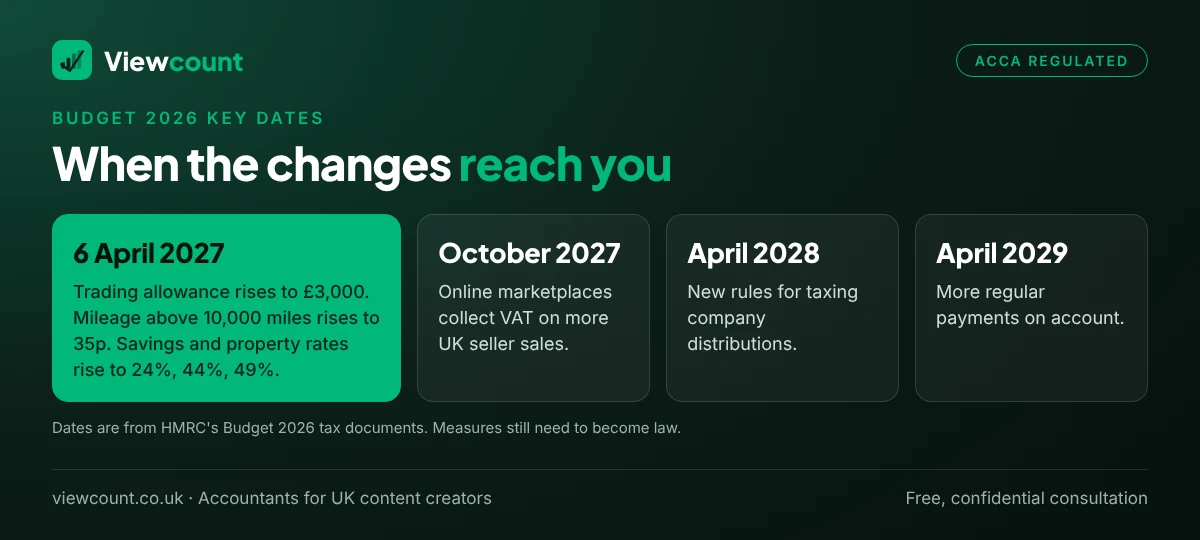
| Change | What happens | When |
|---|---|---|
| Trading allowance | Rises from £1,000 to £3,000. The Self Assessment trading income reporting threshold also rises to £3,000. | 6 April 2027 |
| Business mileage | The rate for miles above 10,000 a year rises from 25p to 35p. | 6 April 2027 |
| Savings and property income | Basic, higher and additional rates rise to 24%, 44% and 49%. Property rates can be set separately in Scotland and Wales. | 6 April 2027 |
| Making Tax Digital | No late submission penalty points for quarterly updates for people who must join in April 2027. | 2027/28 tax year |
| Marketplace VAT | Marketplaces collect VAT on more sales by UK sellers. The threshold and date are set in secondary legislation. | October 2027 |
| Company distributions | Changes to how distributions from companies are taxed. Draft legislation is due for consultation in 2027. | April 2028 |
| Payments on account | More regular in-year payments towards your final bill, set up automatically. | From April 2029 |
What does the £3,000 trading allowance mean for creators?
From 6 April 2027, which is the 2027/28 tax year, creators whose gross trading income is within £3,000 won't need to declare it or pay tax on it. The Self Assessment reporting threshold rises to the same level. Until then, the £1,000 allowance applies, including on your 2026/27 return. Our guide to registering as self-employed covers the £1,000 rules in force today.
Worked example
Illustration only. Sam is a streamer with no other self-employed income who earns £2,400 from sponsorships in 2027/28. That is within £3,000, so Sam doesn't need to declare it or pay tax on it. The same £2,400 in 2026/27 is over the current £1,000 limit, so Sam would need to register for Self Assessment and file a return.
If your income is above the allowance, you still register and file. Under the current rules you choose either the allowance or your actual expenses, not both. We expect the same choice at the higher level, but check the final rules when they are published. Keep your income and expense records either way, because you need them to compare the two.
Watch out
The allowance is one amount across all your trading income, not one per platform. £1,800 from YouTube plus £1,800 from brand deals is £3,600, which is over the limit. It is also based on gross income, before expenses.
How does the mileage change affect creators?
If you use your own car for filming trips, shoots or events, you can claim simplified mileage rates instead of actual vehicle costs. From 6 April 2027 the rate for business miles above 10,000 in a tax year rises from 25p to 35p. The rate for the first 10,000 miles is already 55p a mile for 2026/27, up from 45p, and isn't part of this change. The detailed rules will come in secondary legislation later in the year. See our guide to tax-deductible expenses for UK creators.
What happens with Making Tax Digital?
If your qualifying income on your 2025/26 return was over £30,000, you join Making Tax Digital for Income Tax on 6 April 2027. The Budget tax documents say late submission penalty points won't apply to the quarterly updates for 2027/28 for people joining in April 2027. You still have to send the updates before you can file your return. Our Making Tax Digital guide for creators explains who is in and what to do.
Does the VAT change affect creators who sell products?
It can. From October 2027, online marketplaces will have to collect VAT on sales by UK VAT-registered businesses, and by other UK businesses above a £90,000 annual sales threshold per platform. Personal sales, second-hand goods and business-to-business sales are excluded. The threshold and the exact date will be set in secondary legislation. If you sell merchandise or products through a marketplace, check how the new rules apply to you before then.
Your own VAT registration threshold isn't changing. The Budget tax documents list no change to the £90,000 threshold. See our guides to VAT registration for creators and TikTok Shop tax and VAT.
Not sure which of these changes affect your income? We'll go through your position. See our Self Assessment service.
Get in touchWhat changes for limited company owners?
If you run your creator business through a company, the Budget tax documents set out these changes:
- Company distributions: the government is changing how distributions and capital repayments from companies are taxed, from April 2028. Draft legislation is due for consultation in 2027.
- Business Asset Disposal Relief: the lifetime limit falls from £1,000,000 to £500,000 for disposals on or after 6 April 2027.
- Founders' Relief: a new lower Capital Gains Tax rate applies to qualifying disposals by founders of high-growth companies from 6 April 2027. A technical consultation closes on 30 November 2026.
- Capital allowances: the main writing-down allowance falls to 12% from 6 April 2027 for Income Tax, and a first-year allowance rises to 50% for expenditure from 1 January 2027. Check the detail before buying kit.
Our guide on sole trader or limited company will be worth rereading once the distribution rules are drafted.
What isn't changing?
The Budget announcement doesn't include changes to income tax bands and rates, National Insurance rates, the main VAT rate or the main Corporation Tax rate. The £90,000 VAT registration threshold stays as it is. The Budget also says parental pay will be extended to self-employed dads and partners who previously missed out, but the tax documents don't give a start date yet.
What should creators do now?
- Change nothing for 2026/27. The £1,000 trading allowance still applies until 5 April 2027, and your registration deadlines are unchanged.
- If your side income is under £3,000, plan for 2027/28, but keep records anyway so you can show how you reached your figure.
- If you drive for content, start logging business miles now, so the higher rate above 10,000 miles is easy to claim.
- If you sell products through a marketplace, watch for the October 2027 VAT rules.
- If you have a company, review your pay and dividends plan once the draft distribution rules appear in 2027.
FAQs
Sources
- GOV.UK: Budget 2026, breathing space for today, hope for the future
- GOV.UK: Budget 2026, overview of tax legislation and rates (OOTLAR)
- GOV.UK: Budget 2026 tax related documents
- AccountingWeb: Mileage allowance increased for 2026-27
- GOV.UK: tax-free allowances on property and trading income
This article is general information for UK content creators based on the Budget of 28 October 2026 and HMRC's published tax documents at the date reviewed. Measures still need to be passed into law and details can change. It is not personal tax advice; your circumstances may differ. Talk to us before acting on it.
Plan for the Budget changes
We'll show you which changes apply to your income and what to do before April 2027.
Book a free consultation