Usually not. HMRC does not allow everyday clothing, normal makeup or haircuts as business expenses, even if you only bought them to appear on camera. Costumes, branded clothing and products bought specifically to review or demonstrate are different. This guide explains the rule and where the line falls.
Key takeaways
- An expense must be wholly and exclusively for your business to be allowable.
- Everyday clothing is not allowable, even if you only wear it for work.
- Costumes, character outfits and branded clothing that aren't everyday wear can be claimed.
- Makeup or skincare bought specifically to review or demonstrate is treated differently from your own routine.
- Haircuts and general grooming are personal costs.
What is the rule for claiming appearance costs?
To be allowable, a cost has to be incurred wholly and exclusively for your business. If one of the purposes is personal, the whole cost fails. Clothing and grooming almost always have a personal purpose as well, because everyone needs clothes and a haircut.
The leading case is Mallalieu v Drummond, where a barrister could not claim the black clothes she wore only for court. The court said one purpose was "the provision of the clothing that she needed as a human being". HMRC applies that reasoning to anyone self-employed, including creators.
Can you claim clothes you wear on camera?
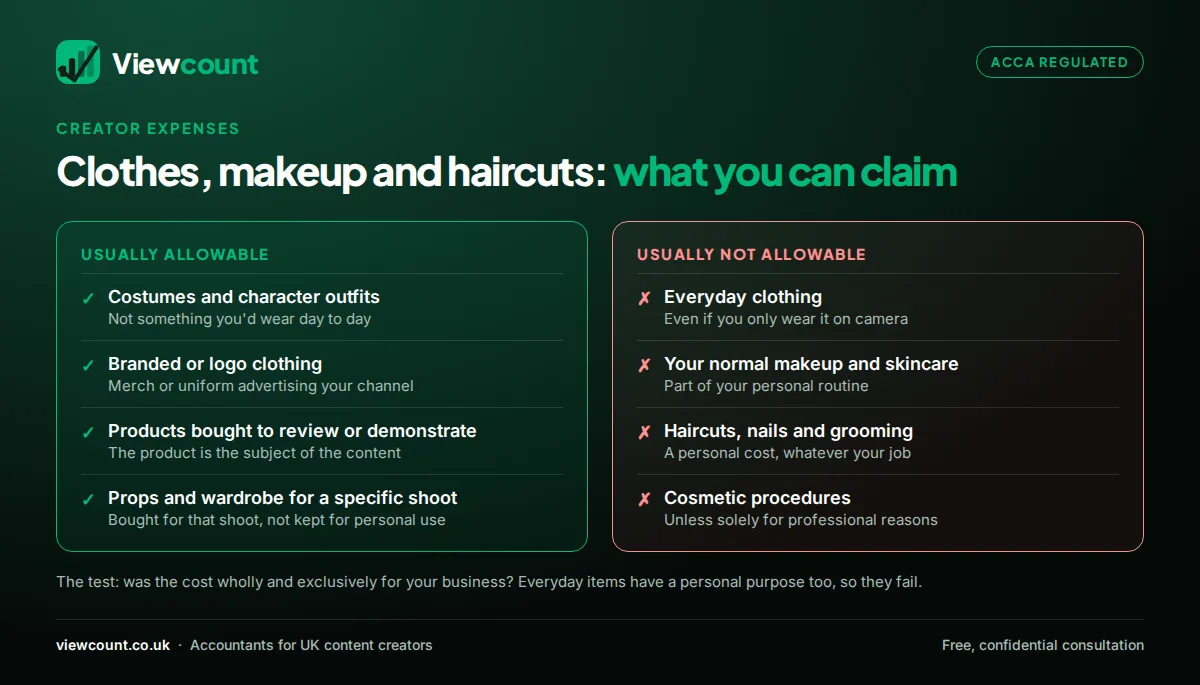
Not if they are everyday clothing. GOV.UK says you cannot claim "everyday clothing, such as suits, shirts, dresses or ordinary shoes - even if you wear them for work". A haul of high-street outfits you film and then wear is everyday clothing.
You can claim:
- Costumes "used for acting, entertaining or advertising your business", unless they are everyday clothing. A character outfit, cosplay or period costume qualifies.
- Branded clothing carrying your channel's logo, such as merch you wear as a uniform.
- Specialist or protective clothing needed for what you film.
Watch out
"I only wear it for filming" doesn't make ordinary clothing allowable. What matters is whether the item could be part of an everyday wardrobe, not how you choose to use it.
Can you claim makeup and skincare?
Your normal makeup and skincare are personal costs. Looking presentable on camera isn't enough to make them business expenses.
Products bought specifically to review, test or demonstrate are different. Where the product is the subject of the content, for example a foundation bought to compare shades in a tutorial, the cost is incurred to make that content. The claim is strongest when you can show the product was bought for a particular piece of content and wasn't simply added to your own routine. Keep the receipt and a note of the video.
Can you claim haircuts, nails and cosmetic treatments?
Generally no. Haircuts, nails, tanning and similar grooming are personal costs whatever your job. HMRC's guidance for performers says cosmetic procedures are only allowable where they were incurred solely for professional purposes, with no private wish to change your appearance. That is a high bar, and most creators won't meet it.
The exception is styling paid for as part of a specific production, such as a hair and makeup artist hired for a brand shoot. That is a cost of the shoot, not of your everyday appearance.
Not sure which of your costs pass the test? We'll go through them with you. See our Self Assessment service.
Get in touchWhat about clothes and products brands send you?
Items you receive in return for content are generally income at their value, whether or not you could have claimed them if you'd bought them yourself. See are gifted products taxable?
How do you keep records that support a claim?
- Keep the receipt and note which video or post the item was bought for.
- Store costumes and props separately from your own wardrobe.
- Don't claim items you then use personally.
- If a cost is borderline, ask before you claim it.
For the wider list, see 10 tax-deductible expenses for UK creators.
FAQs
Sources
- GOV.UK: expenses if you're self-employed, clothing
- HMRC Business Income Manual BIM37910: clothing
- HMRC Business Income Manual BIM50160: entertainers' expenses
This article is general information for UK content creators based on HMRC rules and rates at the date reviewed. It is not personal tax advice; your circumstances may differ. Talk to us before acting on it.
Not sure what you can claim?
We'll review your costs and make sure your return is right.
Book a free consultation