If you've earned from content and never told HMRC, the fix is a voluntary disclosure through HMRC's Digital Disclosure Service. You notify HMRC, then you have 90 days to send your figures and pay. Doing it before HMRC contacts you gets you the lowest penalties.
Key takeaways
- Notify HMRC through the Digital Disclosure Service, then disclose and pay within 90 days of the acknowledgement.
- Calculate profit for each tax year, including the value of gifts, less expenses or the £1,000 trading allowance.
- Can't pay in full? HMRC's guidance is to contact them before you submit.
- Going first, going now and being complete are what keep the penalty down.
What records do you need before you start?
- Payout reports from every platform: YouTube, TikTok, Twitch, Patreon, OnlyFans, affiliate networks.
- The seller statements platforms have sent you each January since 2025.
- Brand deal invoices, contracts and agency statements.
- A list of gifted products and trips received in return for posting, with approximate values.
- Bank and PayPal statements for every year involved.
- Receipts for equipment, software and other business costs.
How do you disclose past income to HMRC?
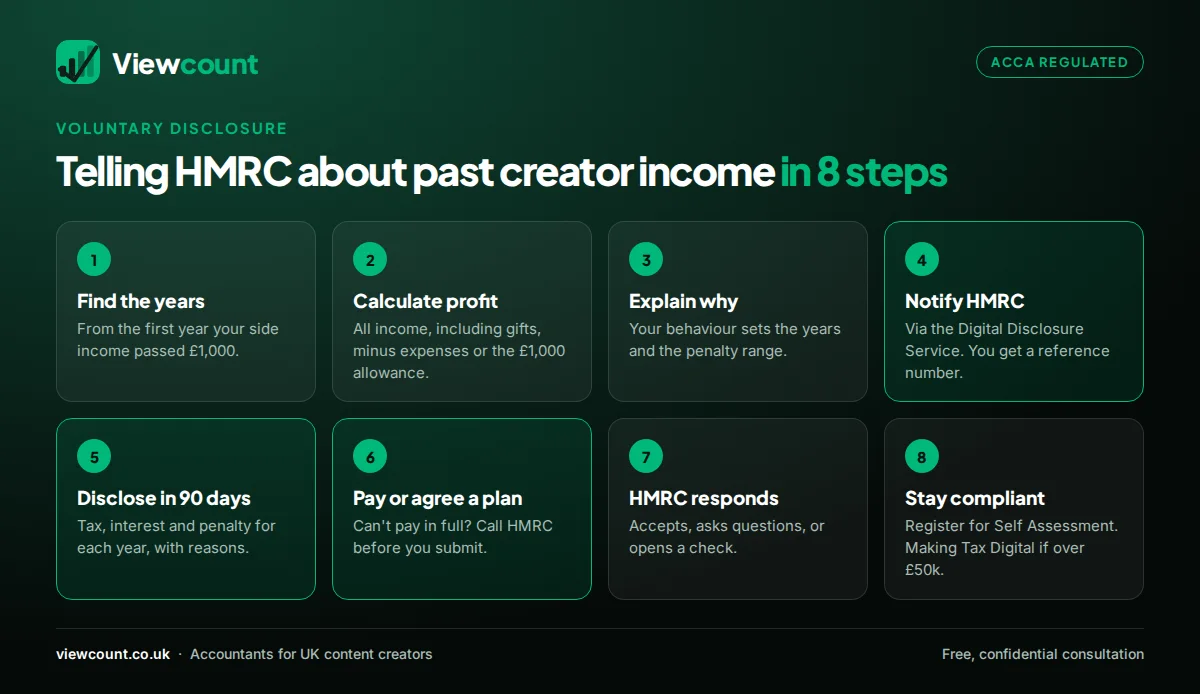
- Work out which years are affected. Start from the first tax year your total side income went over £1,000. How far back you need to go.
- Calculate profit for each tax year. Add up all income, including the value of gifts, then take off allowable expenses. Or use the £1,000 trading allowance instead, whichever gives the better result. You can't use both.
- Be honest about why it happened. Your behaviour decides both how far back you go and your penalty range. For most creators it's non-deliberate: you didn't realise. Say so, and explain briefly.
- Notify HMRC. Use the Digital Disclosure Service through your Government Gateway account. HMRC acknowledges your notification and gives you a disclosure reference number and a payment reference.
- Submit the disclosure within 90 days. The 90 days run from the date HMRC acknowledges your notification. For each year, show the income, tax due, interest and the penalty percentage you're offering, with reasons.
- Pay, or arrange a plan first. Payment is due by the end of the 90 days. If you can't pay in full, contact HMRC before you submit.
- Wait for HMRC's response. HMRC may accept your figures, ask questions, or open a check. Complete, well-supported figures make acceptance far more likely.
- Get compliant going forward. Register for Self Assessment if you haven't already, and file on time from now on. If your self-employed and rental income is over £50,000, Making Tax Digital for Income Tax has applied since April 2026.
Watch out
Don't submit a disclosure without paying and hope for the best. If you can't pay in full, HMRC's guidance is to speak to them first so a payment plan can be agreed.
How can you keep the penalty down?
- Go first. An unprompted disclosure has a lower minimum penalty than a prompted one.
- Go now. Leave it more than 3 years and HMRC's guidance limits your penalty reduction.
- Be complete. HMRC reduces penalties for telling, helping and giving access. A disclosure with gaps loses those reductions and invites a check.
- Claim every expense. Equipment, editing software, props and a share of your phone and home costs all reduce the tax, and so reduce the penalty and interest too.
Want it handled for you? We rebuild your figures and submit to HMRC as your agent. See our Self Assessment service.
Get in touchWhat if you've already had a nudge letter?
You can still use the Digital Disclosure Service. Quote the letter's reference, and don't sign a certificate saying your affairs are correct. What to do about the letter.
FAQs
Sources
- HMRC: your guide to making a disclosure
- HMRC Compliance Handbook CH56100: assessing time limits
- HMRC interest rates for late and early payments
This article is general information for UK content creators based on HMRC rules and rates at the date reviewed. It is not personal tax advice; your circumstances may differ. Talk to us before acting on it.
Let us handle your disclosure
We rebuild your figures, submit to HMRC as your agent and set you up properly for the future.
Book a free consultation