For subscription and fan platforms, the answer is increasingly yes. For YouTube and TikTok ad income, it's usually not automatic. But assuming HMRC can't find out is a bet most creators lose. Here's what is reported, what isn't, and how HMRC sees the rest.
Key takeaways
- Since 1 January 2024, digital platforms report seller earnings to HMRC every January.
- HMRC received data for calendar year 2025 on 31 January 2026, and platforms must send you a copy.
- Fan platforms, marketplaces and freelance sites are generally in scope. YouTube AdSense and TikTok Creator Rewards generally are not.
- Income that isn't reported is still visible through bank data, third-party records and your own public posts.
What are the digital platform reporting rules?
Since 1 January 2024, digital platforms have had to collect details on the people who earn through them and send those details to HMRC every January. The report includes your name, address, tax reference, bank details and how much you earned. HMRC received data for calendar year 2025 on 31 January 2026, and platforms must send you a copy of what they reported.
The rules cover three types of activity:
- Selling goods: merch, prints, TikTok Shop products. Reported once you pass 30 sales or about £1,700 (€2,000) in a year.
- Personal services: HMRC defines these as "time or task-based work performed… at the request of a user". For services there is no minimum. One paid job is enough.
- Renting property or transport: less relevant to most creators.
Which creator income is reported to HMRC?
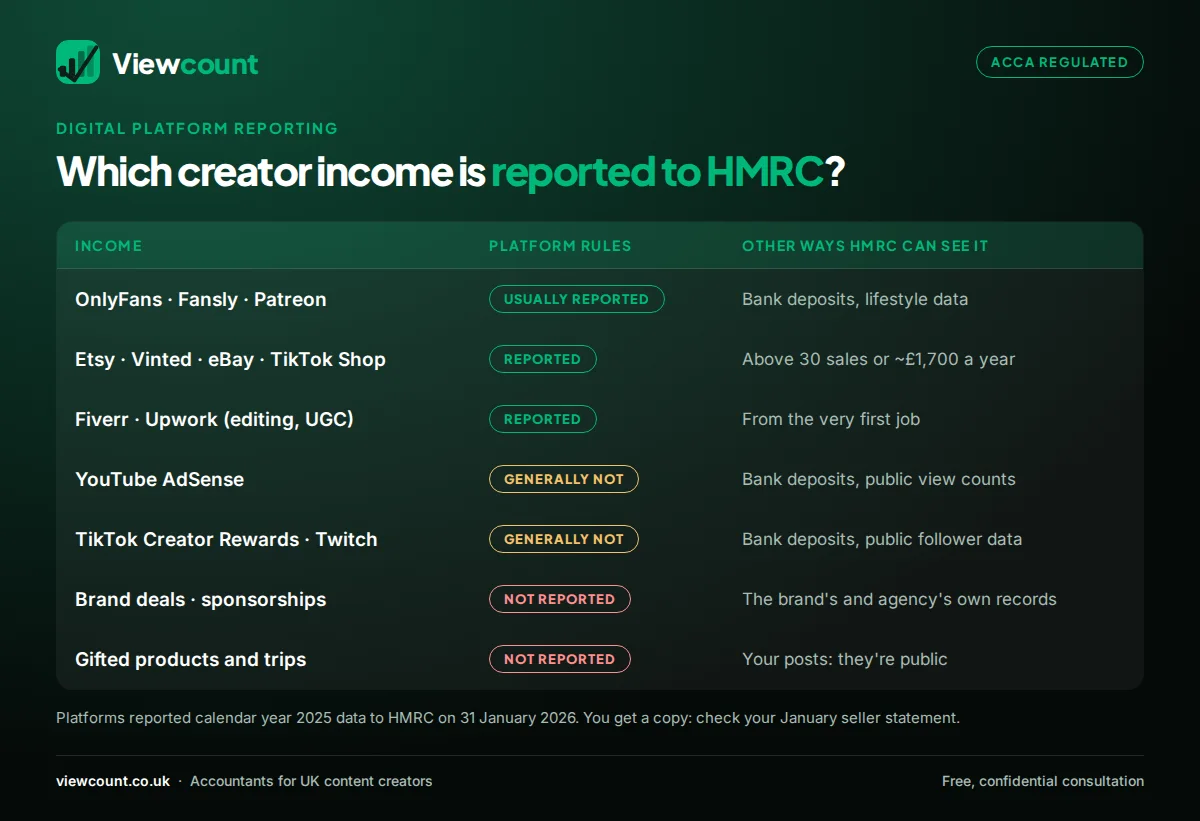
- Usually or always reported: OnlyFans, Fansly, Patreon, Etsy, Vinted, eBay, TikTok Shop, Fiverr, Upwork.
- Generally not reported under these rules: YouTube AdSense, TikTok Creator Rewards, Twitch payouts. The platform pays you for adverts; no fan requests the work.
- Never reported under these rules: brand deals, sponsorships and gifted products.
How confident are we? It's clear-cut for marketplaces and freelance sites. It's less settled for ad-share payouts and subscriptions, because each platform decides whether it meets the definition. Your January seller statement is the only reliable way to know what was sent about you.
Can HMRC see income that isn't reported?
Yes. HMRC doesn't rely on one data source. Its analytics system, Connect, matches tax returns against bank data, Companies House, property records and more. HMRC can also demand bulk data from third parties such as agencies and payment providers.
Creators have one extra problem: your income is advertised. A channel with a million subscribers, a sponsored post with #ad, a brand trip to Dubai. None of that is hard to find. HMRC has already run letter campaigns aimed at content creators, including one asking whether gifted products had been declared.
Watch out
Mismatches between a platform's report and your tax return are exactly what trigger HMRC letters. Keep every January seller statement and reconcile it to your return.
Not sure what HMRC already holds on you? We can check your platform statements against your returns. See our Self Assessment service.
Get in touchWhat should you do now?
- Declared everything? Check each platform's January statement against your tax return. What to do if you get a nudge letter.
- Earned under £1,000 in total? The trading allowance may cover it. That £1,000 is one allowance across all your side income, not one per platform.
- Missed something? Coming forward before HMRC contacts you is the cheapest way out. See how far back HMRC can go and how to disclose.
FAQs
Sources
- LITRG: digital platform reporting rules
- HMRC International Exchange of Information Manual IEIM901510: personal service
- HMRC: tax rules for content creators
- Tax Adviser: social media, the taxation of influencers and content creators
This article is general information for UK content creators based on HMRC rules and rates at the date reviewed. It is not personal tax advice; your circumstances may differ. Talk to us before acting on it.
Not sure what HMRC already holds on you?
We'll review your platform statements against your returns in a free, confidential consultation.
Book a free consultation