An HMRC letter about your online income isn't a tax investigation. It is a warning shot, and what you do in the next 30 days decides how expensive it gets. This guide explains why you got it, what it asks for, and your four options.
Key takeaways
- Nudge letters are compliance letters, not investigations. No enquiry has been opened yet.
- Most ask you to respond within 30 days, often by signing a Certificate of Tax Position.
- You are not legally required to sign the certificate, but never sign it unless every figure is right.
- If income is missing, the route is HMRC's Digital Disclosure Service, with 90 days to disclose and pay.
- Ignoring the letter is the worst option: it is evidence HMRC warned you.
Why did HMRC send me a nudge letter?
HMRC calls these "one-to-many" letters. Most people call them nudge letters. They go out in batches to people HMRC believes have income from online platforms, and 2026–27 is shaping up to be a busy year for them.
Since January 2024, UK digital platforms have had to report what their sellers earn to HMRC. That includes subscription sites like Patreon and OnlyFans, marketplaces like Etsy and Vinted, and freelance sites like Fiverr. The second batch of data, covering calendar year 2025, reached HMRC on 31 January 2026. See which platforms report, and which don't.
HMRC compares that data with Self Assessment returns. If a platform says you earned money and your tax return doesn't show it, or you never filed one, a letter is the cheapest way for HMRC to nudge you. HMRC has also written to content creators directly in earlier campaigns aimed at YouTube, TikTok and Instagram income.
What does the letter ask you to do?
Most versions ask you to do one of three things within 30 days:
- Confirm your tax affairs are already correct.
- Tell HMRC you'll bring your tax affairs up to date.
- Tell HMRC you have income you haven't declared, and start a disclosure.
Many letters include a Certificate of Tax Position for you to sign. You aren't legally required to sign it. But signing a certificate that says "all correct" when it isn't turns a careless mistake into something HMRC can treat as deliberate. That means higher penalties and a longer look-back.
Watch out
Never sign the certificate to make the letter go away. If you are not sure your figures are complete, check them first or ask an accountant to.
What are your options?
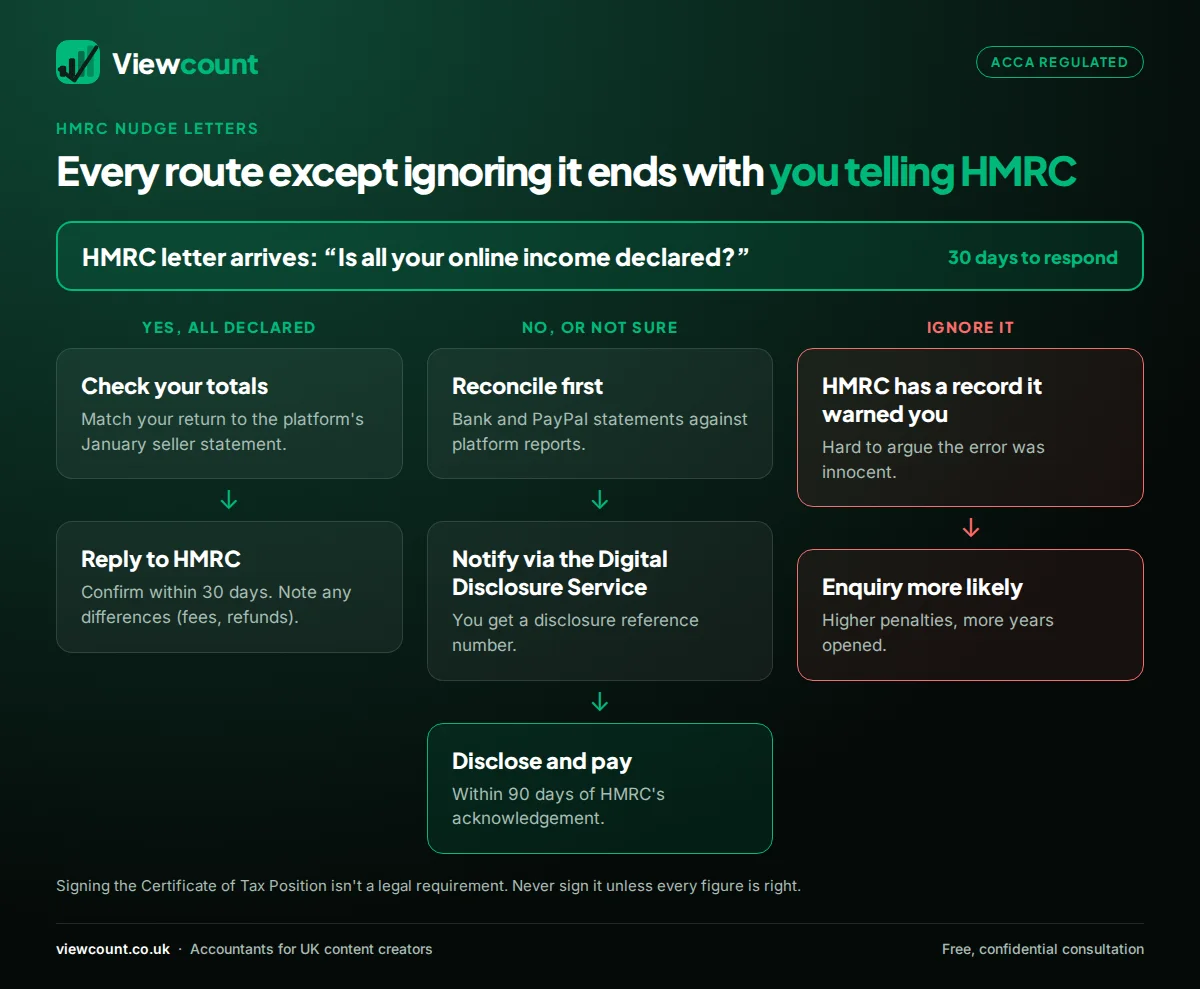
1. Everything is already declared
If your platform income is on your tax returns, check the figures match what the platform reported. You get a copy of that data each January. Then reply to confirm. If the numbers differ, for example because of fees, refunds or a different year-end, keep a short note explaining the difference.
2. Some income is missing
Don't guess. Work out the undeclared amount for each tax year, then use HMRC's Digital Disclosure Service. You get 90 days from HMRC's acknowledgement to send the full disclosure and pay. Our step-by-step disclosure guide walks through it.
3. You're not sure
This is common. Gifted items, US AdSense payments, PayPal transfers and agency fees all muddy the picture. Reconcile a year or two of bank statements against platform reports before you reply.
4. Ignore it
This is the worst option. The letter is evidence that HMRC told you. If HMRC later opens an enquiry, you'll find it hard to argue your error was innocent, and penalties go up.
Got a letter and not sure which option applies? One call with an FCCA accountant will tell you. See our Self Assessment service.
Book a free callDoes replying count as "prompted"?
This matters because penalties are lower when you come forward before HMRC prompts you. Advisers disagree on whether a disclosure made after a nudge letter is prompted or unprompted, and HMRC has treated different campaigns differently. The safe assumption is that the clock is now running. The sooner and more completely you disclose, the bigger the penalty reduction you can argue for.
What could it cost?
You'll pay the tax you owe, plus late payment interest, which is 7.75% a year from 9 January 2026. You may also pay a penalty that depends on your behaviour. For most creators who simply didn't realise they had to register, the penalty range is 0–30% of the tax. See the full penalty table and how far back HMRC can go.
FAQs
Sources
- HMRC: your guide to making a disclosure
- HMRC: tax rules for content creators
- HMRC interest rates for late and early payments
- Ross Martin: HMRC targets online sellers and content creators
This article is general information for UK content creators based on HMRC rules and rates at the date reviewed. It is not personal tax advice; your circumstances may differ. Talk to us before acting on it.
Got a letter? Don't let the 30 days run out
Book a free, confidential call with a Viewcount FCCA. We'll tell you which option applies to you.
Book a free consultation